


For a range of reasons, the Covid-19 pandemic has prompted a lot of people to think more deeply about their career.
For many it has been forced out of pure necessity as industries like travel, hospitality and brick and mortar retail have been hit hard, with widespread closures and job losses. And whilst not all businesses have suffered complete closure, furloughing staff and reducing working hours has been common.
Social distancing and reduced capacity has also changed the set up of a lot of workplaces, meaning that things people might have loved about their jobs before, such as interacting with others, just aren’t the same.
Meanwhile, for some industries, such as e-commerce, online learning and events, business has never been so good. This might be good news for shareholders, but it hasn’t been quite as enjoyable for the staff who, whilst fortunate to have the security of working for businesses thriving in the pandemic conditions, have found themselves pushed harder than ever to keep up with the demand and make hay whilst the proverbial sun shines, as they drag themselves through a draining daily dystopia of back-to-back video calls from dawn until dusk.
Whatever your personal situation, the nature of work has changed for almost everybody in one way or another. And whilst it’s hard to predict to what extent we will ever return to how things were pre-Covid-19, or how many of the changes we’ve experienced are here to stay, the past year’s events have prompted a lot of soul searching for many about the kind of work they want to be doing.
From practical considerations like weighing up the benefits of having a job that can just as easily be done from anywhere, with the expectation that you can carry on working regardless of how emotionally or mentally overwhelmed you feel.
To questions around purpose and the drive to use our talents to make a more positive impact that is brought into ever sharper focus when the daily global newsreels are so full of human and environmental suffering.
And to those of us who, over the past 14 months, have reconnected with old passions, or discovered new skills that we’re now excited to explore further.
So, if you find yourself at such a crossroads, whether you’re looking for inspiration or practical guidance to explore and inform your new direction, I hope you’ll find something of relevance in this week’s edition of The Power Up.
In this week’s issue:
- Mental models for career changes
- The psychological trap that’s keeping you from making smart career choices
- 5 Strategies for reinventing your career in uncertain times
- The hidden dangers of ‘following your passion’
- Make life an adventure and it will change your life forever
- Why it’s never too late to change your career
- If you want a dream career, ask these 3 questions
Plus plenty of bonus content too…
As ever, I hope there’s something you can take away to help inform whatever your next move might be.

M I N D
Mental models for career changes
Career changes are some of the biggest moves we will ever make, but they don’t have to be daunting.
Using mental models to make decisions, we can be clearer on where we want to go and how to get there.
The result is a change that aligns with the person we are, as well as the person we want to be.
M I N D
The psychological trap that’s keeping you from making smart career choices
Despite their huge life importance, many of us make flawed calculations when making career decisions, because their potential rewards are far away in the future.
Instead we often let the immediate next move, or the tempting offer of a pay rise blind us to the bigger picture of what actually makes the most sense for us.
This is called ‘temporal discounting’…


S E L F L E A D E R S H I P
5 Strategies for reinventing your career in uncertain times
Periods of uncertainty also offer great opportunities for reflection and strategic planning.
Total control and predictability are always an illusion — and when circumstance strips that illusion away, it can open our minds to the wide variety of paths we could take.
HBR shares five strategies that can help anyone reinvent their career strategy.
S P I R I T
The hidden dangers of ‘following your passion’
By 2009, “follow your passion” had become a dominant cultural narrative about success.
Books like The Four Hour Workweek proliferated. Bloggers were getting book deals and people were turning side hustles into full-time jobs. The advice to follow your passion was echoed in self-help books, blog posts, and commencement speeches.
But people rarely talk about the hidden dangers of following your passion…

S P I R I T
Make life an adventure and it will change your life forever
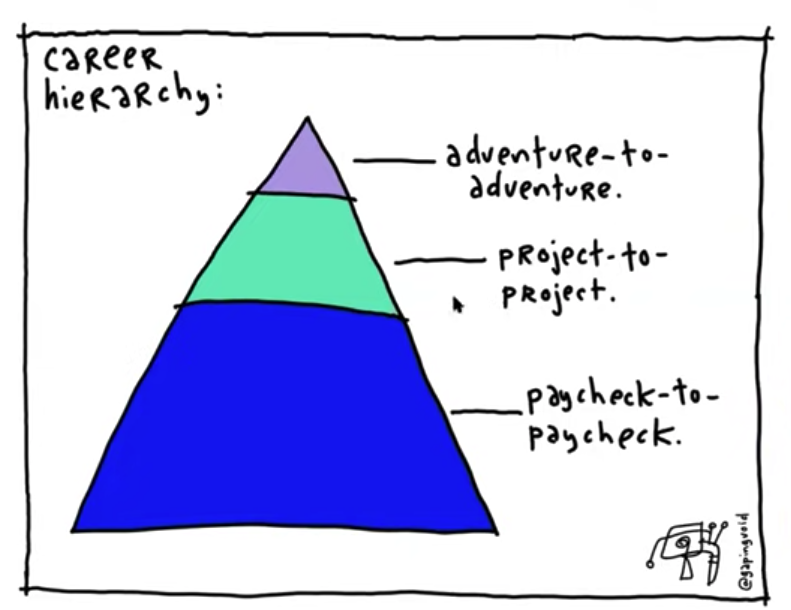
Are you living paycheck to paycheck; project to project; or adventure to adventure?
Ponder this question as you watch this short, inspirational video from Dr. Benjamin Hardy.
R E C O M M E N D E D
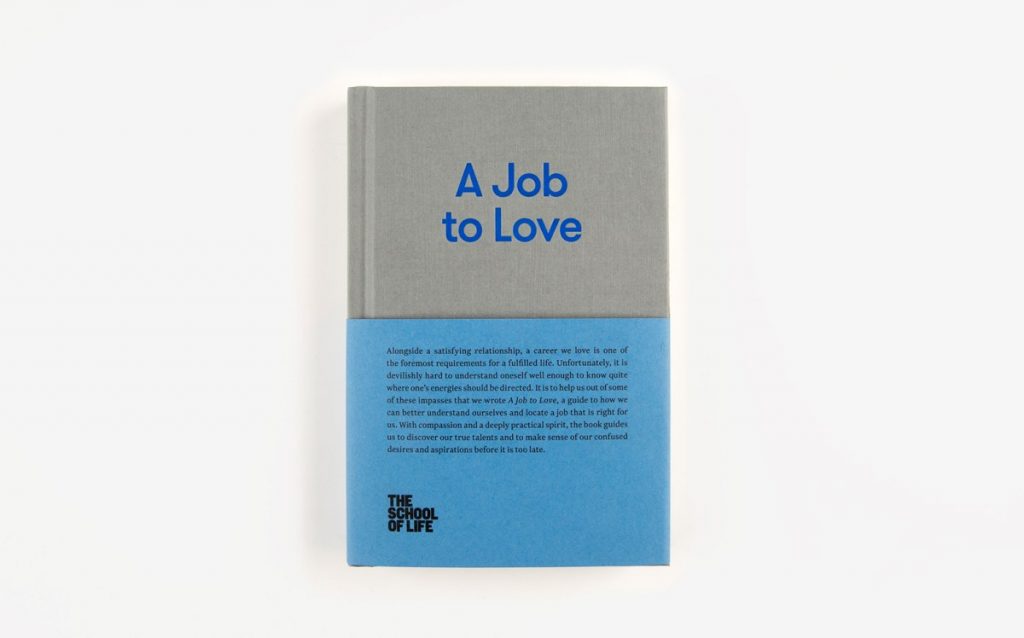
A Job to Love
A Job to Love is a short, yet inspiring and provoking read from The School of Life that I’d recommend for anybody at a career crossroads, really unsure of where to turn next.
Mixing philosophy with psychology and short, fun-yet-insightful exercises, you’ll end the book with your eyes opened to possibilities and dreams that you’ve overlooked or long forgotten.

R E C O M M E N D E D
The Full Focus Planner
Whenever I’m planning my next move or project I find that putting physical pen to paper is the most effective way of getting in touch with what I’m truly thinking and feeling.
The Full Focus Planner will help you get your thoughts straight and plan out clear steps and measurable milestones to guide and drive you on your way.
If you also want the clarity that comes with the Full Focus Planner, you can get 10% off using the link below.
B O N U S
C O N T E N T

What are core personal values? And how to discover yours
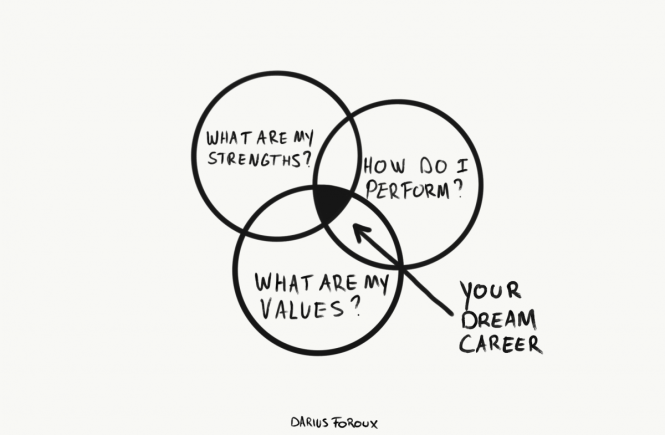
If you want a dream career, ask these 3 questions

Why it’s never too late to change your career
The four pillars of a fulfilling career
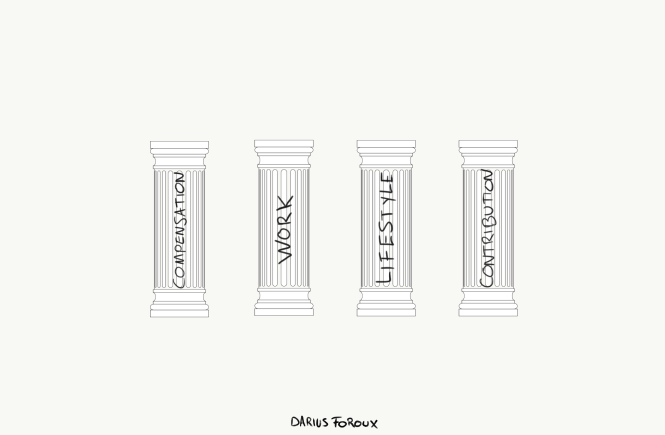

How to blend an ambitious career with a meaningful life
5 Career Change myths debunked


‘Leapers’, ‘planners’ & the career pivot
For great career advice, look back to your childhood

“The truth is that our finest moments are most likely to occur when we are feeling deeply uncomfortable, unhappy, or unfulfilled.
M. Scott Peck
“For it is only in such moments, propelled by our discomfort, that we are likely to step out of our ruts and start searching for different ways or truer answers.”